CS
CS


Work During Studies
Working during your studies can help you build your CV, gain practical skills and support your budget.
Can you work during your studies?
In most cases, yes. The rules depend on your nationality, your residence status and the type of study programme you are taking.
Are you from the EU, EEA or Switzerland?
Are you from the EU, EEA or Switzerland?
You have the same access to the Czech labour market as Czech citizens. You do not need a work permit to work in Czechia. If you stay in Czechia for more than 30 days, remember to check your registration duties after arrival. Visit the EURES website for guidance.
Are you from outside the EU?
Are you from outside the EU?
If you are a non-EU student, you may be able to work without a separate work permit:
- If you study a full-time university-accredited programme in Czechia: in this case, you do not need to apply for a separate work authorisation for a specific job. Your employer still has to report your employment to the relevant authority.
- If you are an exchange student or staying in Czechia for a short time: different rules may apply. Some short-term work can be possible without a work permit under specific conditions, for example for students under 26 when the work does not exceed 7 consecutive calendar days or 30 days in total per calendar year.
If your situation does not match these exceptions, you will need to apply for an employment permit or an employee card. Remember: your main purpose of stay is your studies. Choose work that you can realistically manage alongside your programme.
Can you work during your studies?
In most cases, yes. The rules depend on your nationality, your residence status and the type of study programme you are taking.
Are you from the EU, EEA or Switzerland?
You have the same access to the Czech labour market as Czech citizens. You do not need a work permit to work in Czechia. If you stay in Czechia for more than 30 days, remember to check your registration duties after arrival. Visit the EURES website for guidance.
Are you from outside the EU?
If you are a non-EU student, you may be able to work without a separate work permit:
- If you study a full-time university-accredited programme in Czechia: in this case, you do not need to apply for a separate work authorisation for a specific job. Your employer still has to report your employment to the relevant authority.
- If you are an exchange student or staying in Czechia for a short time: different rules may apply. Some short-term work can be possible without a work permit under specific conditions, for example for students under 26 when the work does not exceed 7 consecutive calendar days or 30 days in total per calendar year.
If your situation does not match these exceptions, you will need to apply for an employment permit or an employee card. Remember: your main purpose of stay is your studies. Choose work that you can realistically manage alongside your programme.
How it works in practice
Many students in Czechia combine university with a part-time job or internship. According to EUROSTUDENT, 70% of students have a paid job during the lecture period. Work should not take over your studies, though. Think about how much time you can realistically dedicate to it and when your busiest periods at university are likely to be. Students often work under flexible agreements rather than full-time employment contracts. The right option depends on the type of job, the number of hours and how regular the work will be. The most common options are:
Agreement on work performance (DPP)
DPP is often used for short-term jobs, one-off tasks, summer work or smaller projects. You can work up to a maximum of 300 hours per calendar year for one employer.
Agreement on work activity (DPČ)
DPČ is a better fit for regular part-time work during the semester. You can work up to an average of 20 hours per week, which is half of the standard weekly working hours.
Employment contract
An employment contract is a more stable form of work. It can be full-time or part-time. Keep in mind that your primary reason for being in Czechia is your studies. Balancing full-time work with a daily study programme can be extremely demanding.

Check official labour market rules
Your expected salary
The national minimum wage in Czechia (5/2026) is 134,40 CZK/hour or 22 400 CZK/month for a full-time job with a 40-hour working week. For typical part-time student jobs, you can realistically expect 150-200 CZK/hour. Your final net pay depends on your contract type, income, tax settings and insurance contributions. If you sign the taxpayer declaration with your employer, you may be able to apply the basic taxpayer tax credit.
Do you need Czech?
Not always, but it helps. Many jobs in Czechia require Czech, especially customer-facing roles, local administration, health care, education or public services. You can still find opportunities where English is useful. This is more common in larger cities like Prague or Brno, international companies, research teams, tourism, IT, marketing or roles connected to your native language. Start with your university career centre and look for jobs that match both your language skills and your study schedule.
How to find a job
Finding a job takes some effort, but you do not have to start alone. Use university support, official portals, online job boards and your own contacts.
Prepare your documents
Before you apply, prepare a clear CV and a short cover letter. You can also create your LinkedIn profile. Focus on what you can offer, what you want to learn and why the role fits your studies. If you have little work experience, include projects, volunteering, student organisations, language skills and technical skills.
Create a structured CV with Europass
Use websites with job offers
Browse reliable job portals and use filters such as location, field, part-time, English-speaking or student-friendly. You can look for jobs through:
- Labour Office Employment | ÚP
- EURES EURES – Your Guide to Work in Europe | ÚP
- general job portals like Jobs.cz or Práce.cz
- international community websites and fairs like Expats.cz or Jobspin.cz
- internship and trainee programme websites
- company career pages
Build your network
Some opportunities come through people you already know. Stay in touch with classmates, teachers, alumni and people from student projects or professional communities. You can also look for opportunities through student clubs, conferences, volunteering, LinkedIn groups or field-specific social media groups.
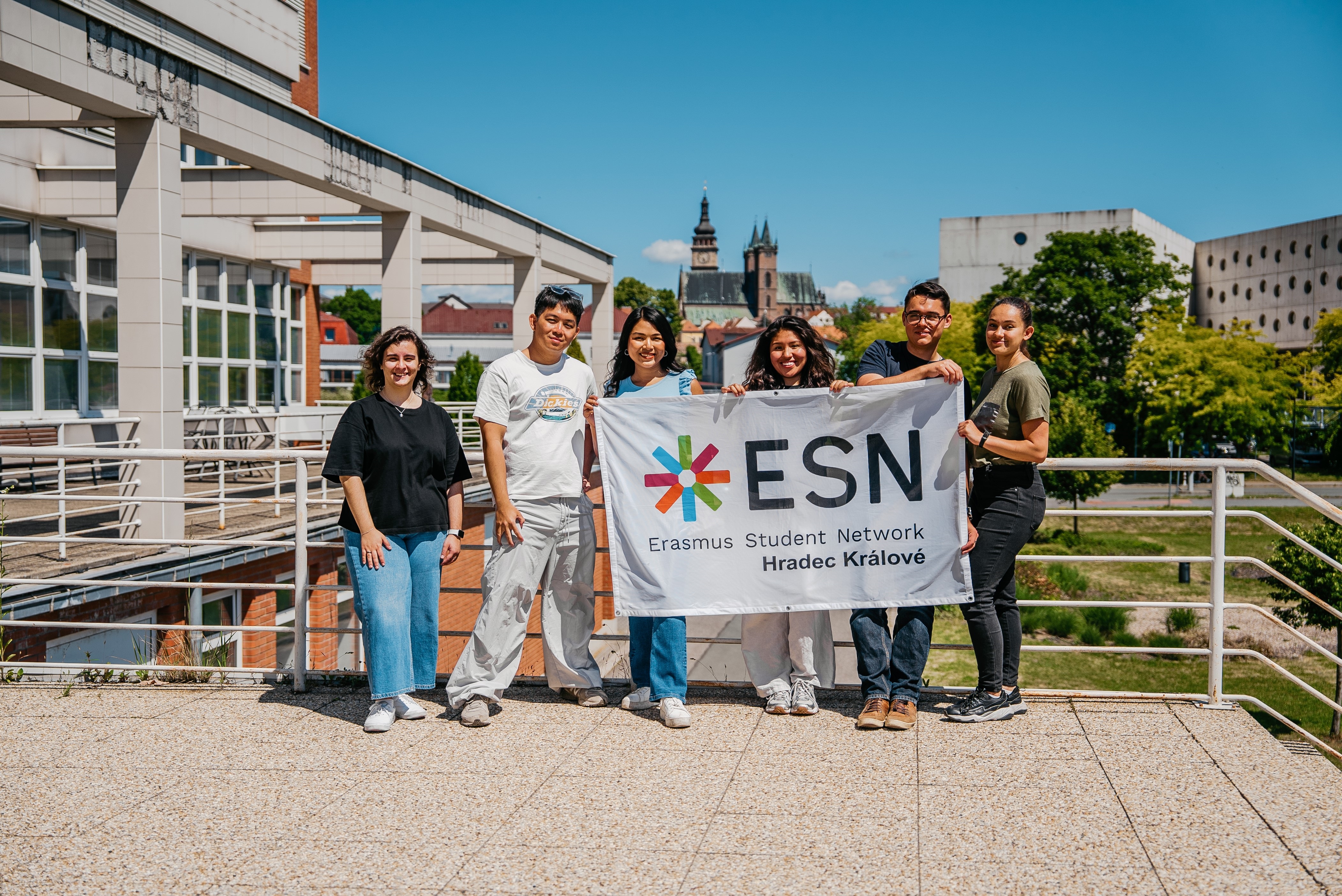
Discover More About Student Clubs
Know your rights
As an international student working legally in Czechia, you have the same rights to fair working conditions as Czech citizens. You should know that:
- your agreement or contract must be in writing
- your pay must not be lower than the minimum wage
- working time and rest periods are regulated
- your employer must follow health and safety rules
- discrimination is not allowed
If something feels wrong, ask for help. You can contact your university career centre or the Labour Office, which provides free counselling for foreigners.
Working after graduation
Want to stay in Czechia after finishing your studies? Non-EU graduates can apply for a residence permit for the purpose of seeking employment or starting a business. This permit is valid for up to 9 months and you must apply before your current residence permit expires.