 CS
CS


Study program Technical Cybernetics
Contact:
E-mail study.FM@tul.cz
Technical University of Liberec - Fakulta mechatroniky, informatiky a mezioborových studií
The "Environmental Engineering" degree programme trains creative researchers in the field of research and development through individual scientific inquiry and independent creative work. During the course of study, students are expected to work on specific scientific projects in collaboration with an international partner institution, which is also reflected in the mandatory internship. Graduates will find employment primarily as scientific, research, and development staff in industry, research and development organizations, and in education as university professors or research project leaders. Graduates of the doctoral programme in “Environmental Engineering” master advanced experimental and theoretical tools for studying environmental problems and apply an engineering approach to their solutions. In particular, graduates possess knowledge of physical, chemical, and biological measurements of qualitative and quantitative indicators in the environment, the conduct of laboratory experiments or the modeling of their results, and the practical application of these results. Furthermore, based on this knowledge and the results of their work, they are able to design specific practical applications, optimize their parameters, and monitor their effectiveness. They further develop their professional profile by selecting from a range of required-elective and elective courses.
Find detailed information here: https://www.fm.tul.cz/en/admissions/doctoral-studies/admission-information
Graduates of the doctoral programme in Technical Cybernetics acquire, as part of their studies, a theoretical foundation in the relevant natural sciences (mathematics and physics) that enables them to address issues in other engineering disciplines—studied through specialized courses and their dissertation topics—at a high scientific level. They have practical experience in conducting scientific experiments and analyzing results. They are capable of independent scientific and research work in their field of specialization, possess deep theoretical knowledge in this field, and are able to present engineering and scientific results at the international level. Graduates are also capable of engaging in engineering, development, and research work at industrial or scientific research institutions. Graduates find employment primarily as scientific, research, and development staff in industry, research and development organizations, and in education as university instructors or research project leaders. Emphasis is placed on aligning research specialization with an understanding of broader, and often interdisciplinary, contexts. The programme develops the application of the latest scientific knowledge in practice. The faculty recruits students for doctoral studies both from among graduates of its own master’s programme and from students at other Czech and foreign institutions. Professional Knowledge Through their studies, graduates acquire the following knowledge: • knowledge of mathematics and relevant natural science disciplines as the foundation of scientific work, • in-depth knowledge of the fundamentals of the field of study, • an interdisciplinary overview spanning engineering and the natural sciences. Professional Skills Graduates are able to: • conduct independent and team-based engineering and scientific work based on a detailed analysis of a given issue, • critically analyze, evaluate, and synthesize current professional knowledge in the field of study and use it to create scientific and engineering works that expand the boundaries of current knowledge and the state of the art, • work with the literature and publish results at international conferences and in scientific journals, • prepare and lead research projects. Career Opportunities for Graduates Graduates can apply their education in the following areas: • researcher in theoretical and applied research, • development engineer in domestic and international industry, • academic staff at universities.
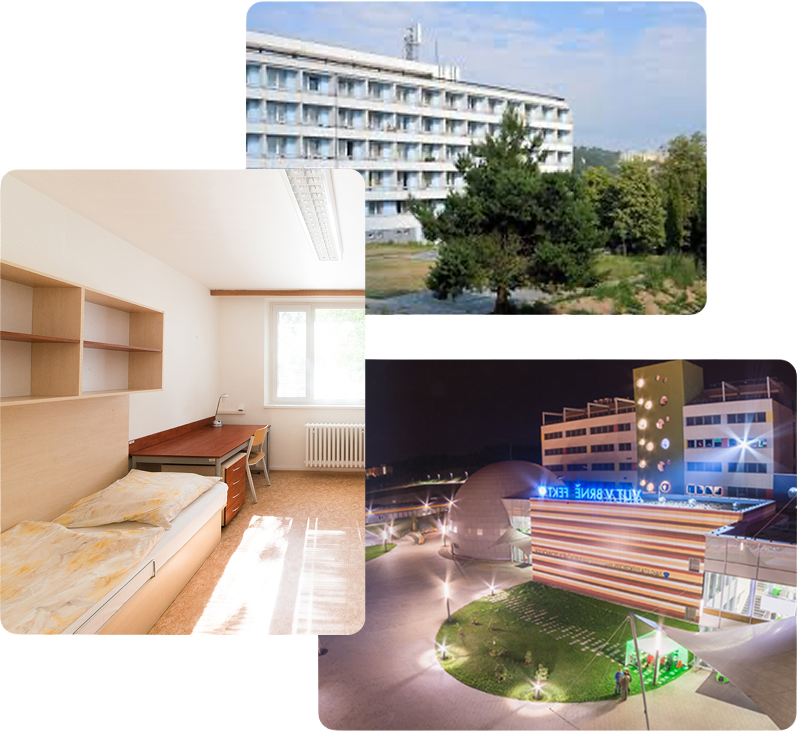
Technical University of Liberec (TUL) is a modern public university with more than seventy years of tradition. It connects engineering, natural sciences, economics, education, healthcare and the arts, and links education with research and practice. You will study at a university known for cooperation with industry partners, innovation and applied research. Its internationally recognised fields include nanomaterials, advanced technologies, mechanical engineering, mechatronics and sustainability-related research. Liberec offers a strong quality of life, with mountains and nature close by and many options for sport and outdoor activities. At TUL, you can use modern facilities, benefit from a supportive academic environment and work closely with faculty members. You can also join international exchanges and take part in research and innovation projects during your studies.
E-mail study.FM@tul.cz
Studentská 1402/2, 46117 Liberec
Phone
The "Environmental Engineering" degree programme trains creative researchers in the field of research and development through individual scientific inquiry and independent creative work. During the course of study, students are expected to work on specific scientific projects in collaboration with an international partner institution, which is also reflected in the mandatory internship. Graduates will find employment primarily as scientific, research, and development staff in industry, research and development organizations, and in education as university professors or research project leaders. Graduates of the doctoral programme in “Environmental Engineering” master advanced experimental and theoretical tools for studying environmental problems and apply an engineering approach to their solutions. In particular, graduates possess knowledge of physical, chemical, and biological measurements of qualitative and quantitative indicators in the environment, the conduct of laboratory experiments or the modeling of their results, and the practical application of these results. Furthermore, based on this knowledge and the results of their work, they are able to design specific practical applications, optimize their parameters, and monitor their effectiveness. They further develop their professional profile by selecting from a range of required-elective and elective courses.
Find detailed information here: https://www.fm.tul.cz/en/admissions/doctoral-studies/admission-information
Graduates of the doctoral programme in Technical Cybernetics acquire, as part of their studies, a theoretical foundation in the relevant natural sciences (mathematics and physics) that enables them to address issues in other engineering disciplines—studied through specialized courses and their dissertation topics—at a high scientific level. They have practical experience in conducting scientific experiments and analyzing results. They are capable of independent scientific and research work in their field of specialization, possess deep theoretical knowledge in this field, and are able to present engineering and scientific results at the international level. Graduates are also capable of engaging in engineering, development, and research work at industrial or scientific research institutions. Graduates find employment primarily as scientific, research, and development staff in industry, research and development organizations, and in education as university instructors or research project leaders. Emphasis is placed on aligning research specialization with an understanding of broader, and often interdisciplinary, contexts. The programme develops the application of the latest scientific knowledge in practice. The faculty recruits students for doctoral studies both from among graduates of its own master’s programme and from students at other Czech and foreign institutions. Professional Knowledge Through their studies, graduates acquire the following knowledge: • knowledge of mathematics and relevant natural science disciplines as the foundation of scientific work, • in-depth knowledge of the fundamentals of the field of study, • an interdisciplinary overview spanning engineering and the natural sciences. Professional Skills Graduates are able to: • conduct independent and team-based engineering and scientific work based on a detailed analysis of a given issue, • critically analyze, evaluate, and synthesize current professional knowledge in the field of study and use it to create scientific and engineering works that expand the boundaries of current knowledge and the state of the art, • work with the literature and publish results at international conferences and in scientific journals, • prepare and lead research projects. Career Opportunities for Graduates Graduates can apply their education in the following areas: • researcher in theoretical and applied research, • development engineer in domestic and international industry, • academic staff at universities.
Technical University of Liberec (TUL) is a modern public university with more than seventy years of tradition. It connects engineering, natural sciences, economics, education, healthcare and the arts, and links education with research and practice. You will study at a university known for cooperation with industry partners, innovation and applied research. Its internationally recognised fields include nanomaterials, advanced technologies, mechanical engineering, mechatronics and sustainability-related research. Liberec offers a strong quality of life, with mountains and nature close by and many options for sport and outdoor activities. At TUL, you can use modern facilities, benefit from a supportive academic environment and work closely with faculty members. You can also join international exchanges and take part in research and innovation projects during your studies.
E-mail study.FM@tul.cz
Studentská 1402/2, 46117 Liberec
Phone
Check out this institution's offerings
Explore similar programs' offerings